01
Industry Knowledge
Generic knowledge about how an industry works.
Explore KDD / KDD Framework
KDD is a Knowledge Structuring Framework that connects structured knowledge with execution. It helps organisations and professionals move from broad industry understanding to detailed, implementable knowledge.
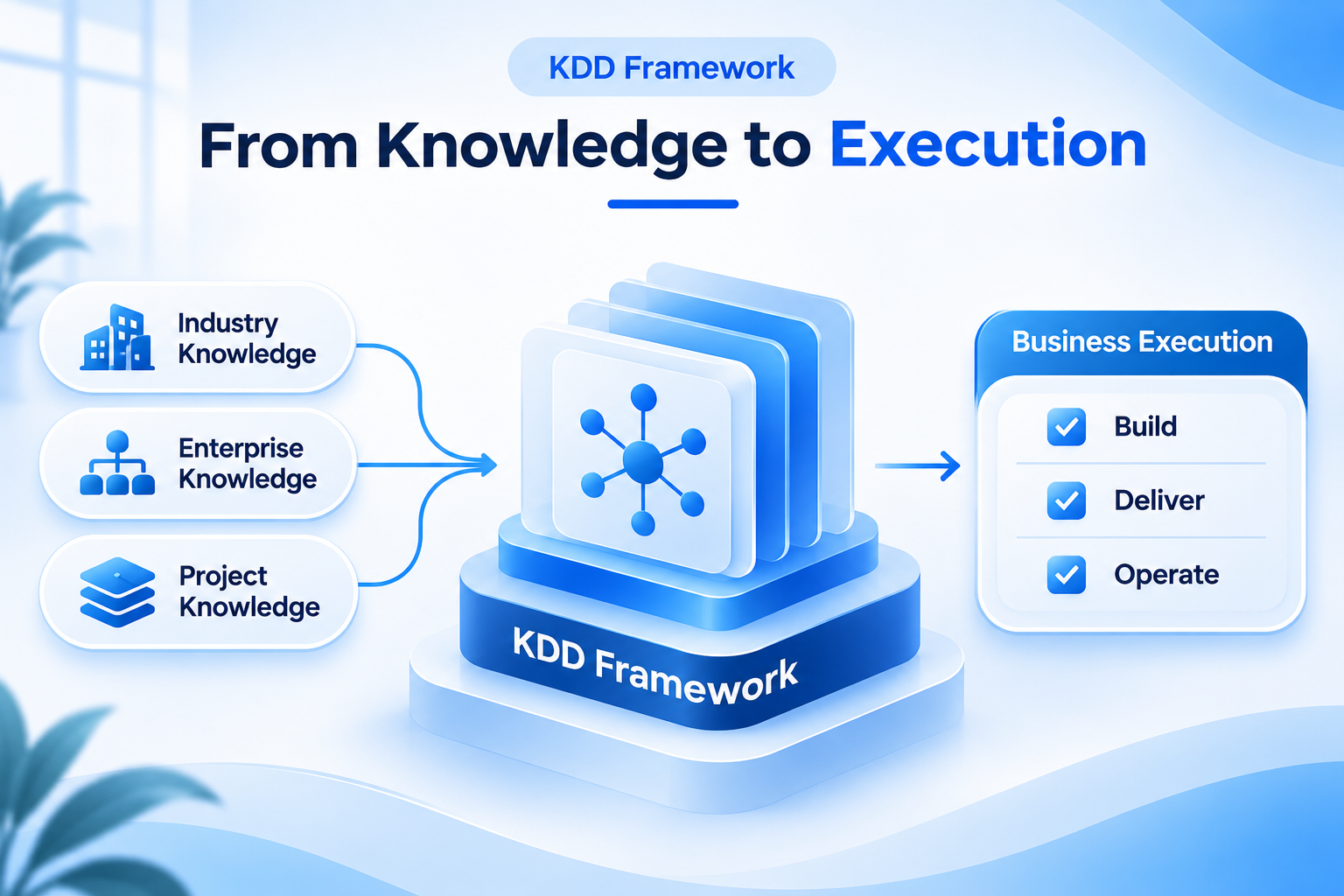
There are three types of knowledge that a working professional should acquire: industry, enterprise and project knowledge.
Generic knowledge = Industry knowledge
Implementable knowledge = Project Knowledge
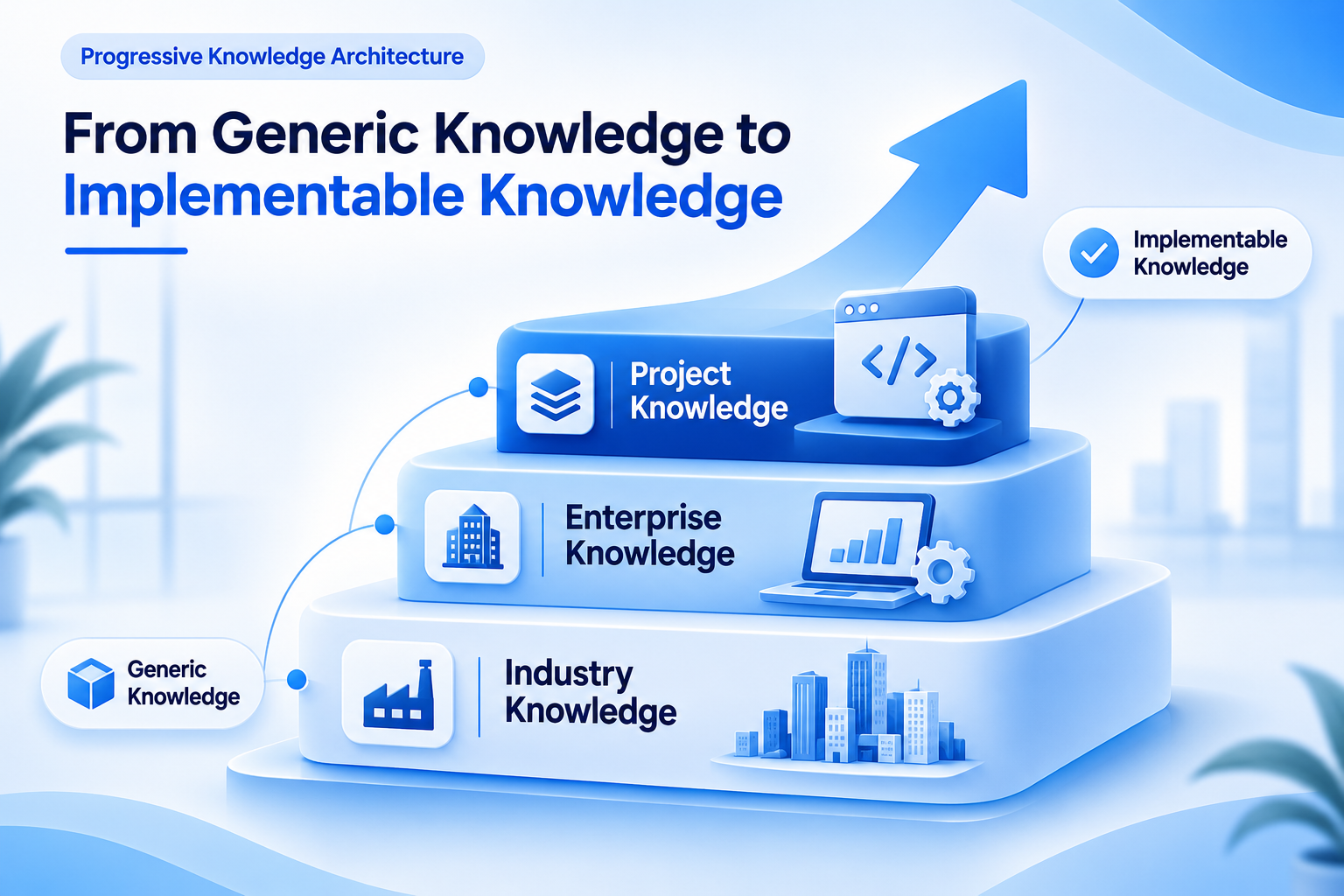
Generic knowledge about how an industry works.
Knowledge specific to an organisation - its products, processes, systems, and operations.
Detailed knowledge required to execute a specific project.
Industry Knowledge → Enterprise Knowledge → Project Knowledge
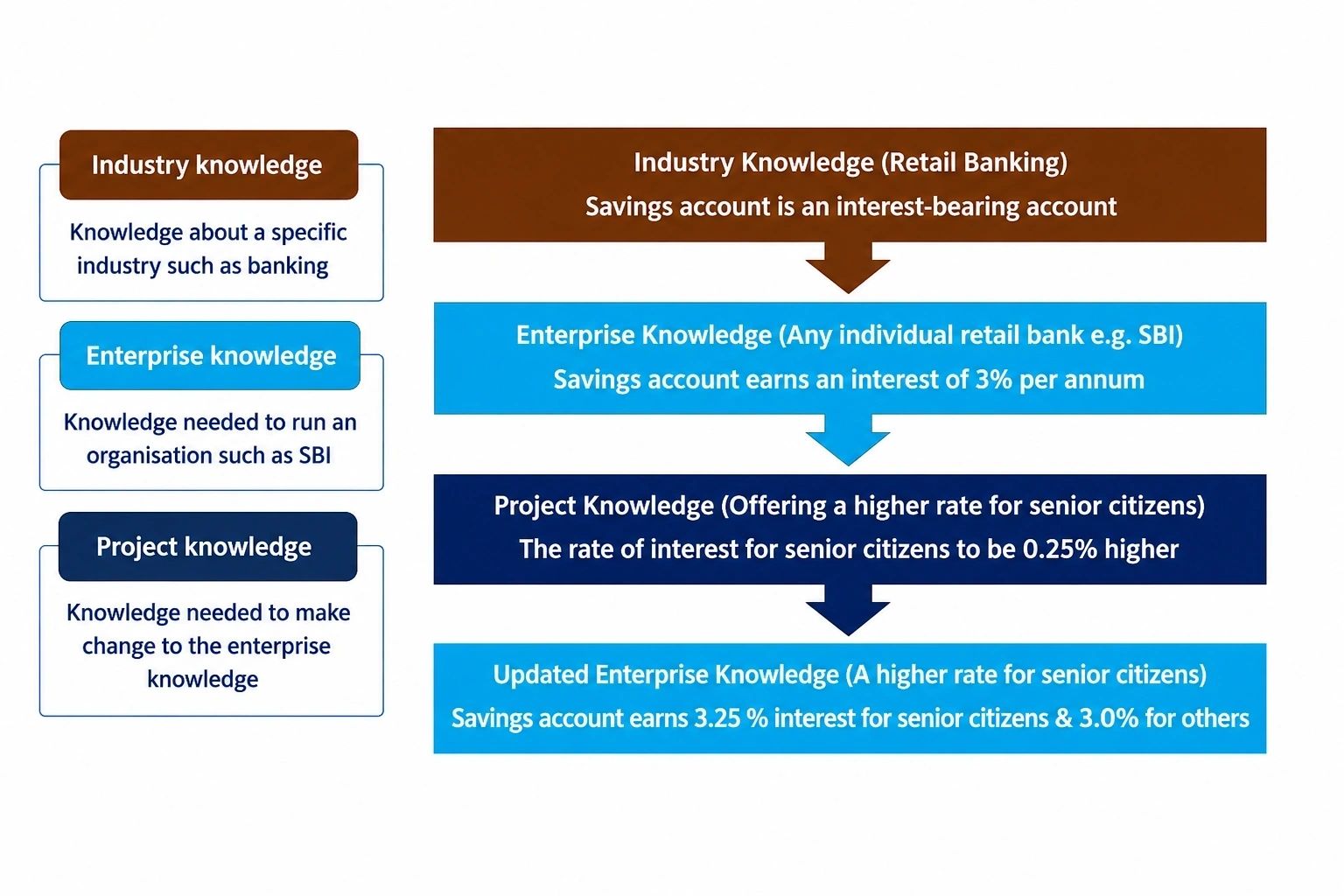
Through a simple interconnected example from retail banking domain, the terms industry, enterprise and project knowledge are explained.
It also indicates how enterprise knowledge can be kept in continuous improvement state post project delivery.
Knowledge Driven Development (KDD) is all about structuring knowledge (DKF) for faster delivery (AKM).
It helps achieve the fine balance between knowledge and execution activities.
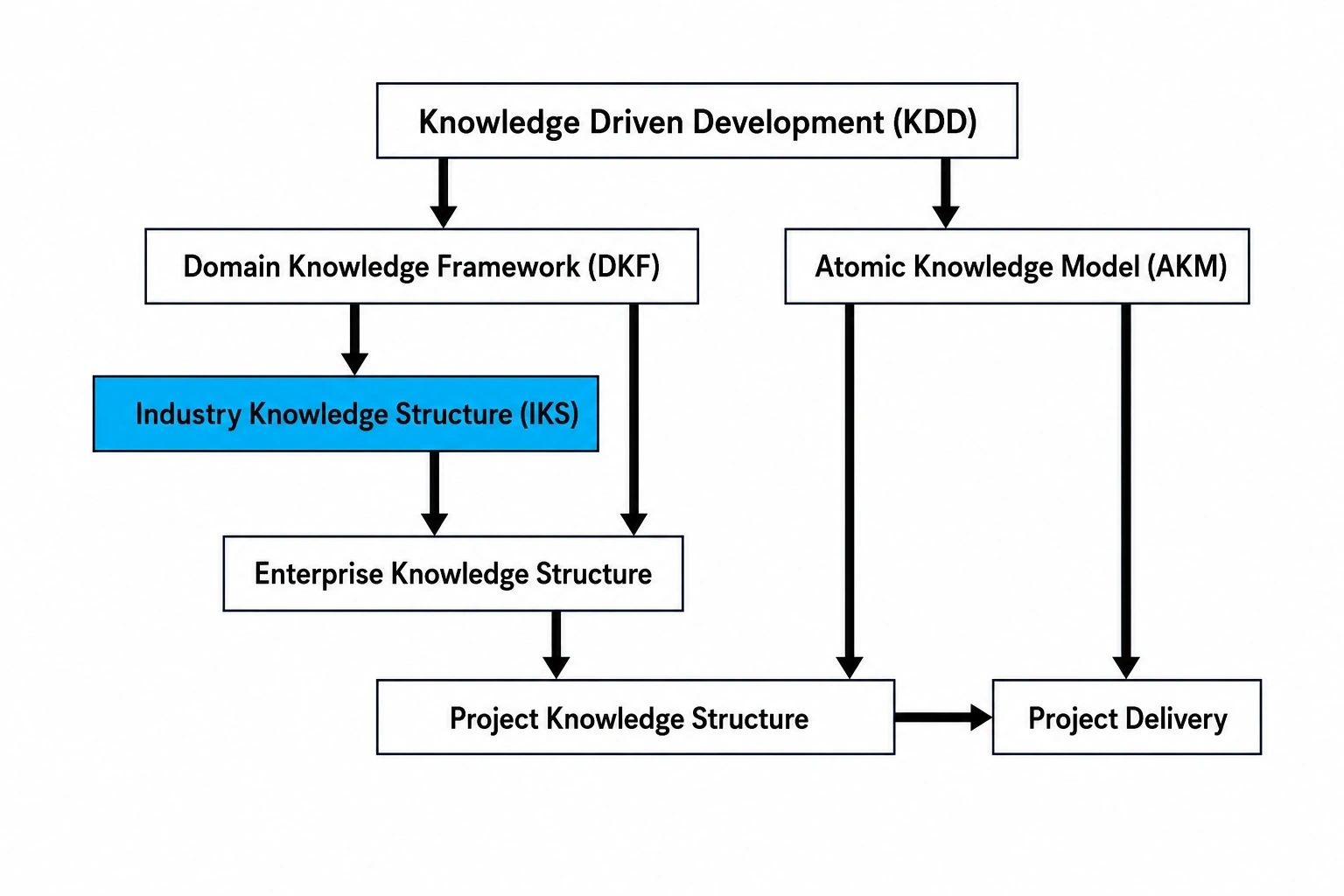
In both industry and academia, KDD introduces many firsts across knowledge and execution.
KDD transforms the way industry knowledge is structured, taught and applied.
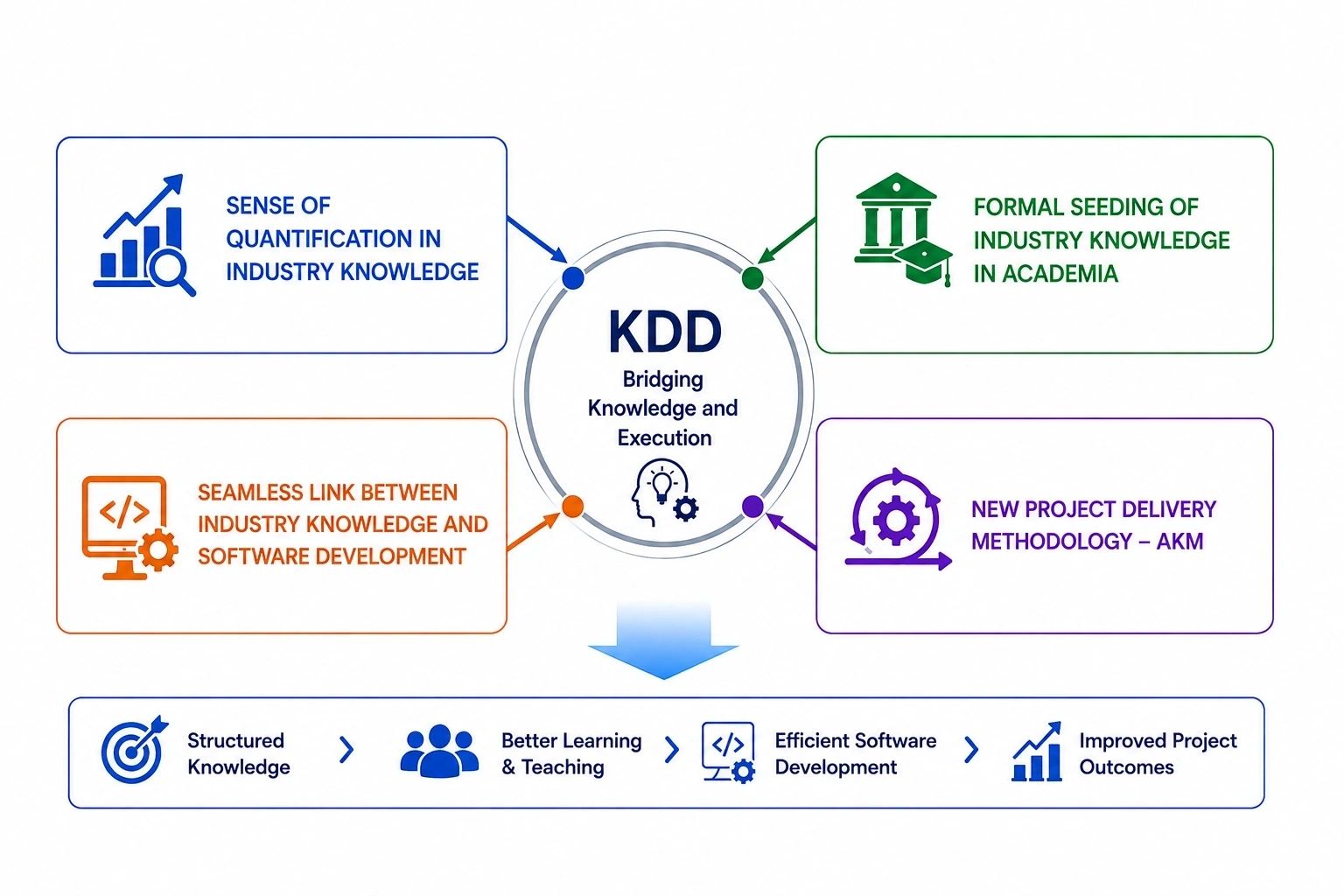
Explore the building blocks of KDD, how they connect industry and enterprise knowledge, and what changes when that knowledge drives delivery.
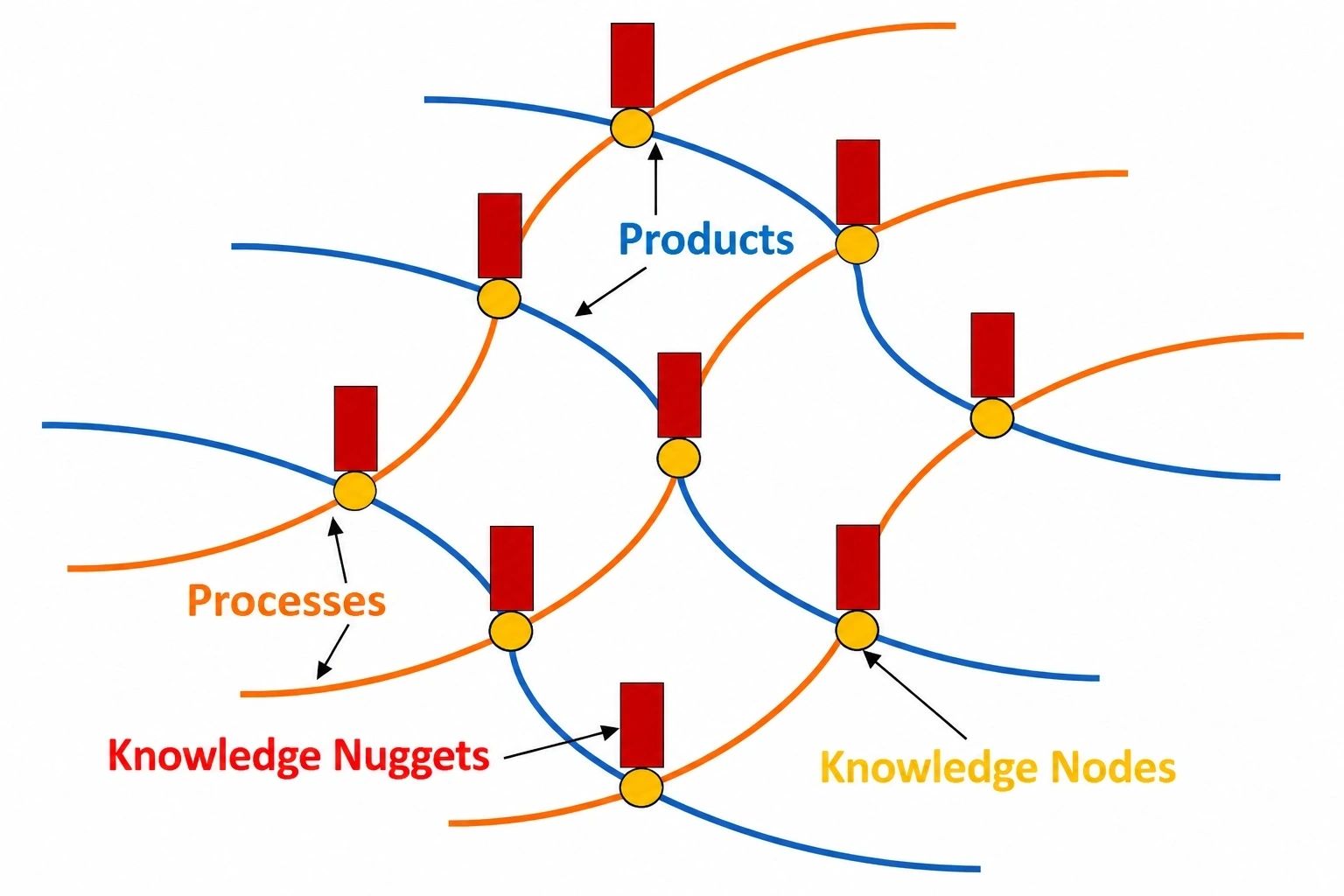
The Product–Process Mesh is a two-dimensional matrix and a fundamental construct of industry knowledge.
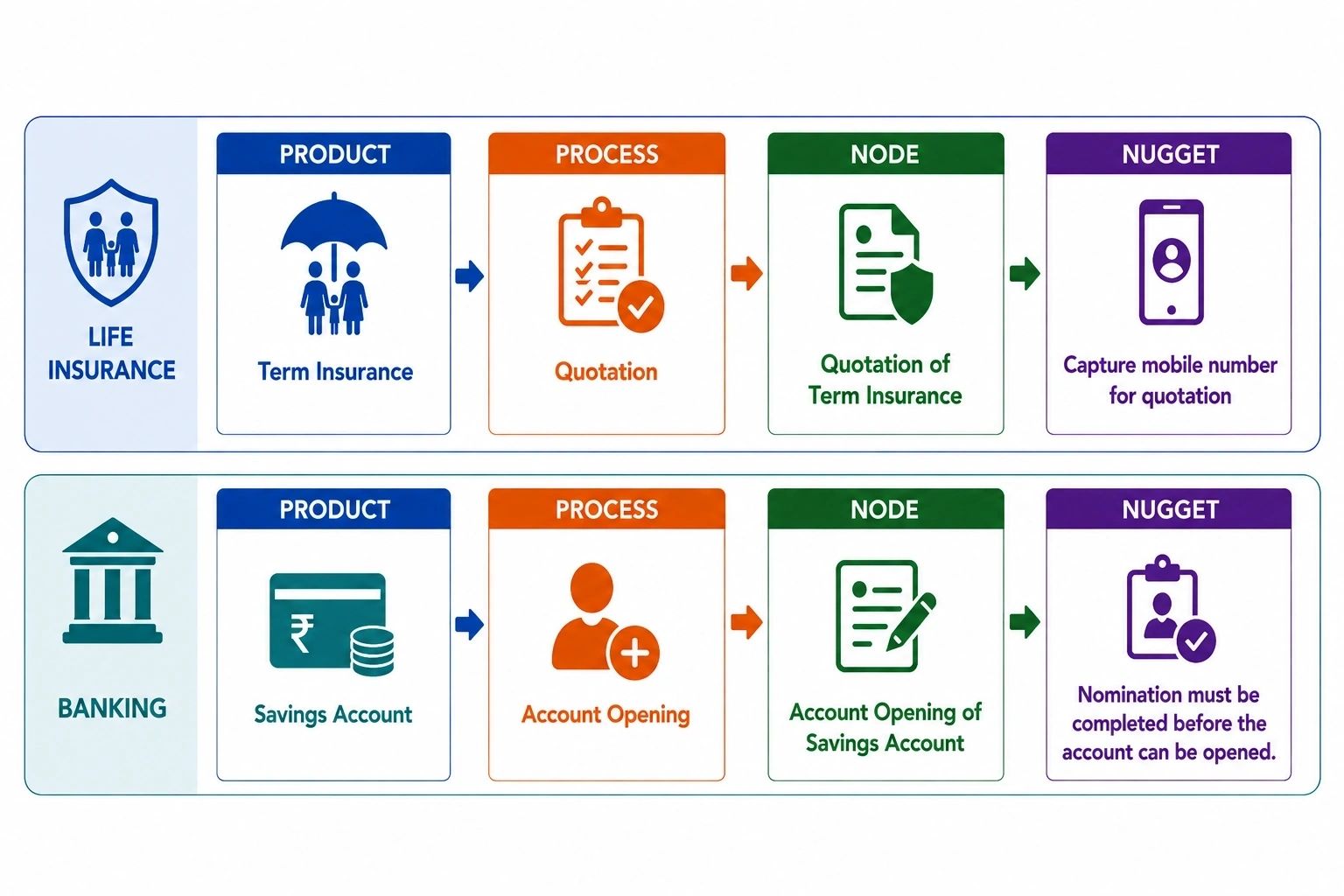
A product is an industry’s offering. A process represents activities across that product’s lifecycle. Their intersection is a node, and a nugget is a unit of information attached to that node.
Examples from Insurance and Banking show how products, processes, nodes, and nuggets work in practice.
Understanding these terms provides a foundation for understanding industry knowledge.
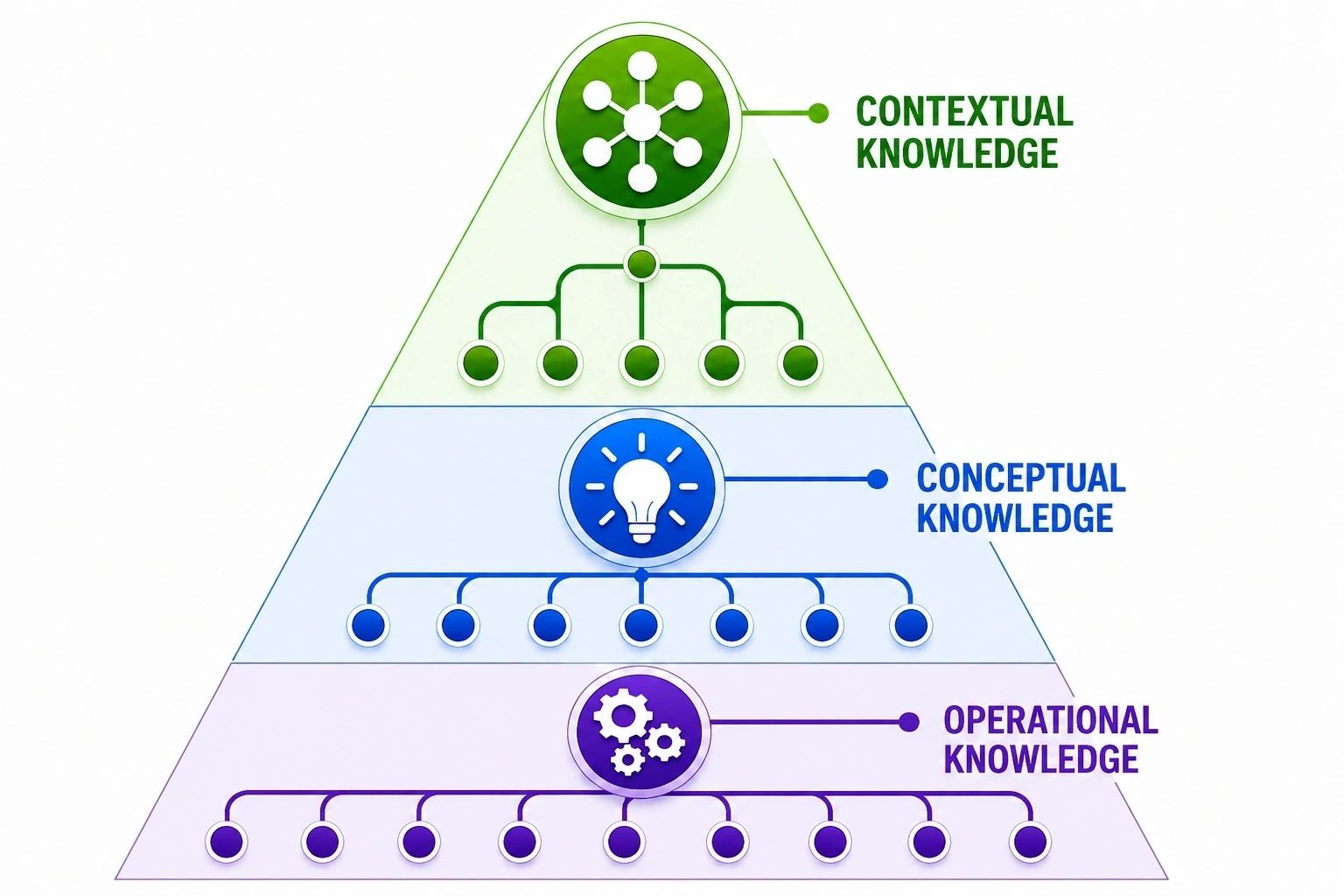
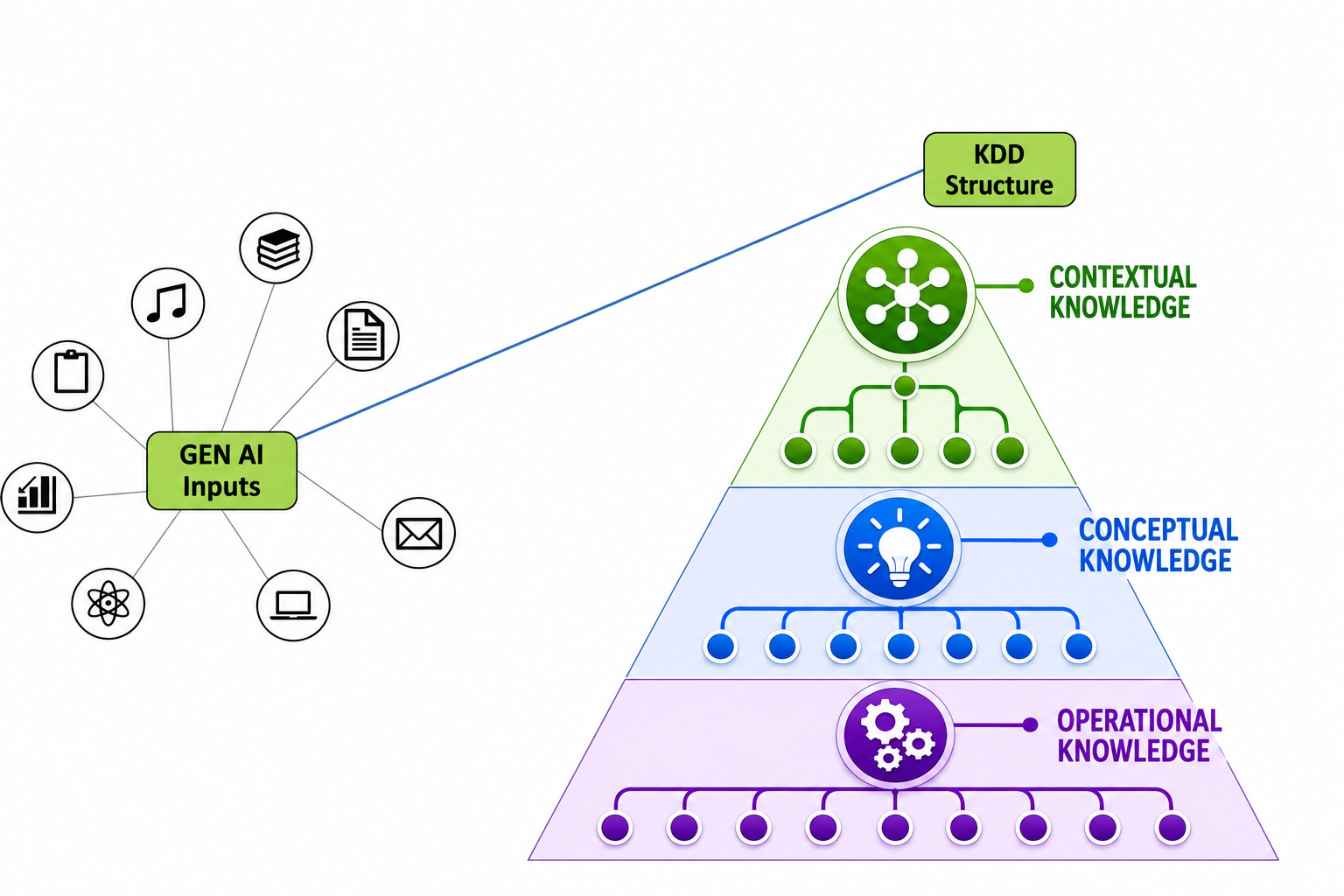
IKS has three layers: Contextual, Conceptual, and Operational Knowledge. The Conceptual and Operational layers contain multiple levels of Product–Process Mesh.
Contextual Knowledge covers high-level topics as nodes, with the details of each topic captured as nuggets. It does not use a Product–Process Mesh.
At the operational level, nuggets contain atomic information that cannot be split any further.
An example of atomic nugget - Date of birth can not be a future date.
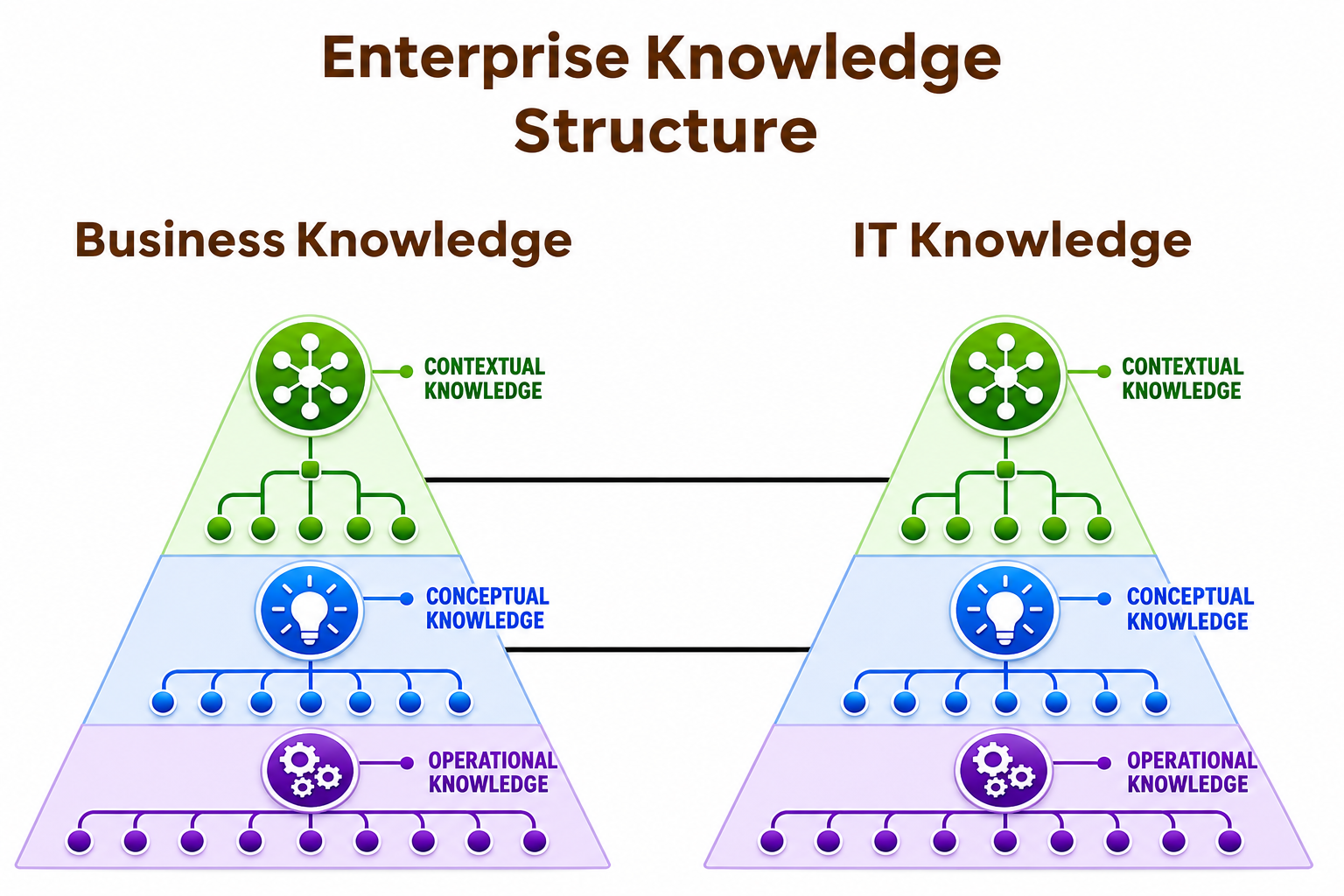
Enterprise knowledge connects business knowledge with IT knowledge. Business knowledge follows the Industry Knowledge Structure.
IT knowledge also has four levels of hierarchy, starting with an IT application and progressing to a business transaction. IT nodes and nuggets populate this structure.
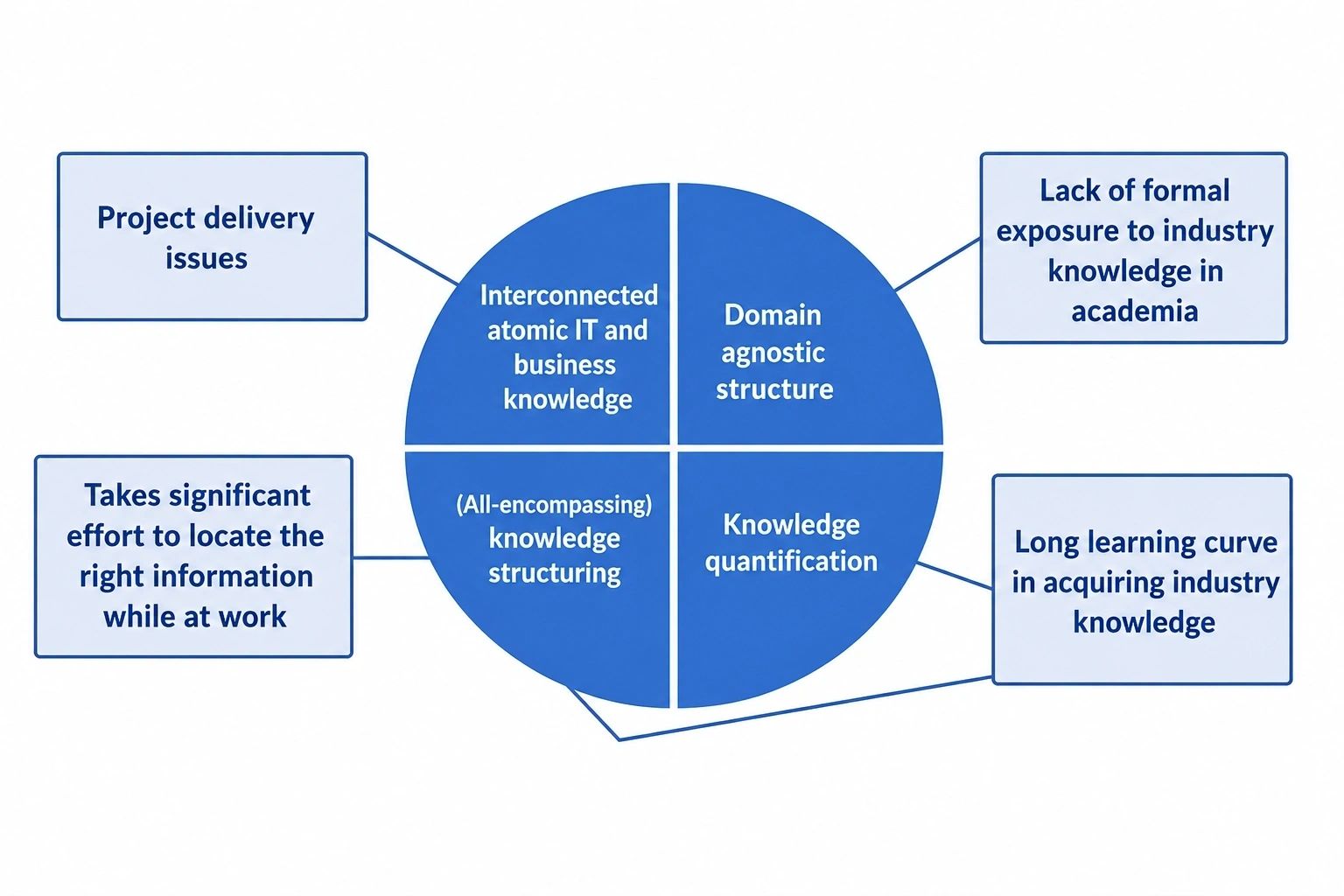
The diagram brings together four common concerns about domain knowledge and project delivery.
The four KDD characteristics in the central circle show how the framework addresses these concerns through structured knowledge.
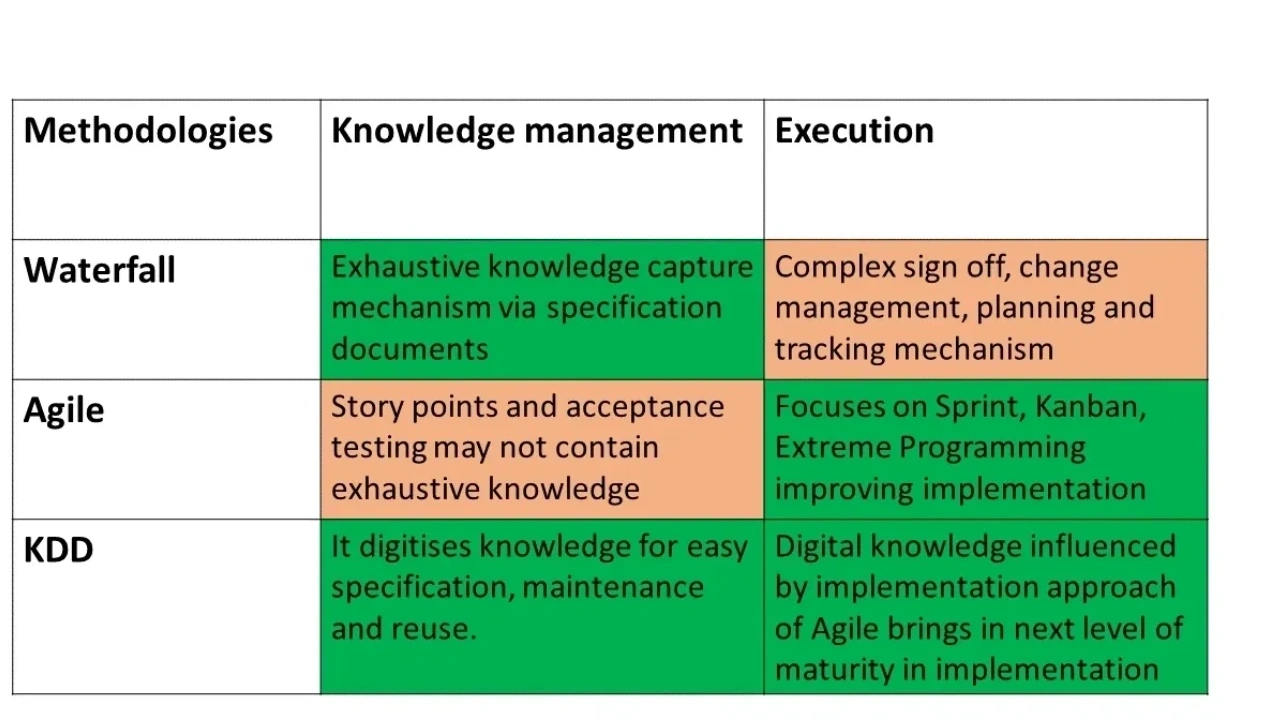
Waterfall: Too much emphasis on knowledge that can delay execution.
Agile: Too much emphasis on execution that can compromise the output.
KDD: It aims to balance knowledge activities with execution activities throughout project delivery.
It can be adopted as a project delivery methodology or used to structure knowledge for both Waterfall and Agile.
Structuring knowledge can significantly improve the quality of the project at reduced cost.
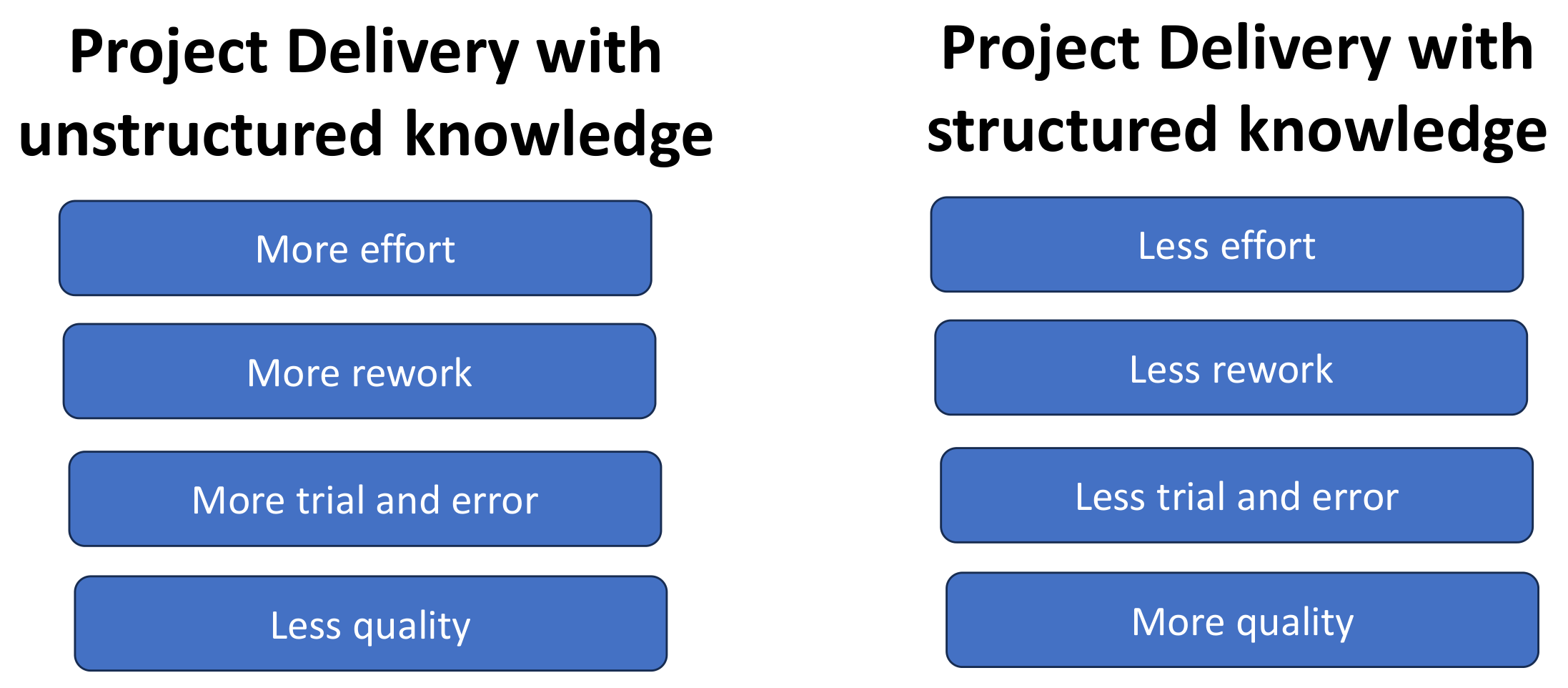
A populated KDD structure can provide reliable input to generative AI, helping reduce hallucinations.
Generative AI can also help populate the KDD structure with nodes and nuggets for different industries.
Start your 1-hour journey into Life Insurance and see the bigger picture.